School year 2026/27

The calendar: seven sessions, seven exhibitions

The year is divided into sessions. Each session is one quest, and at the end of each the children show what they have done at an exhibition we invite you to. Between sessions there is either a holiday or a passion project week.

The school year: from 1 September to the beginning of July.
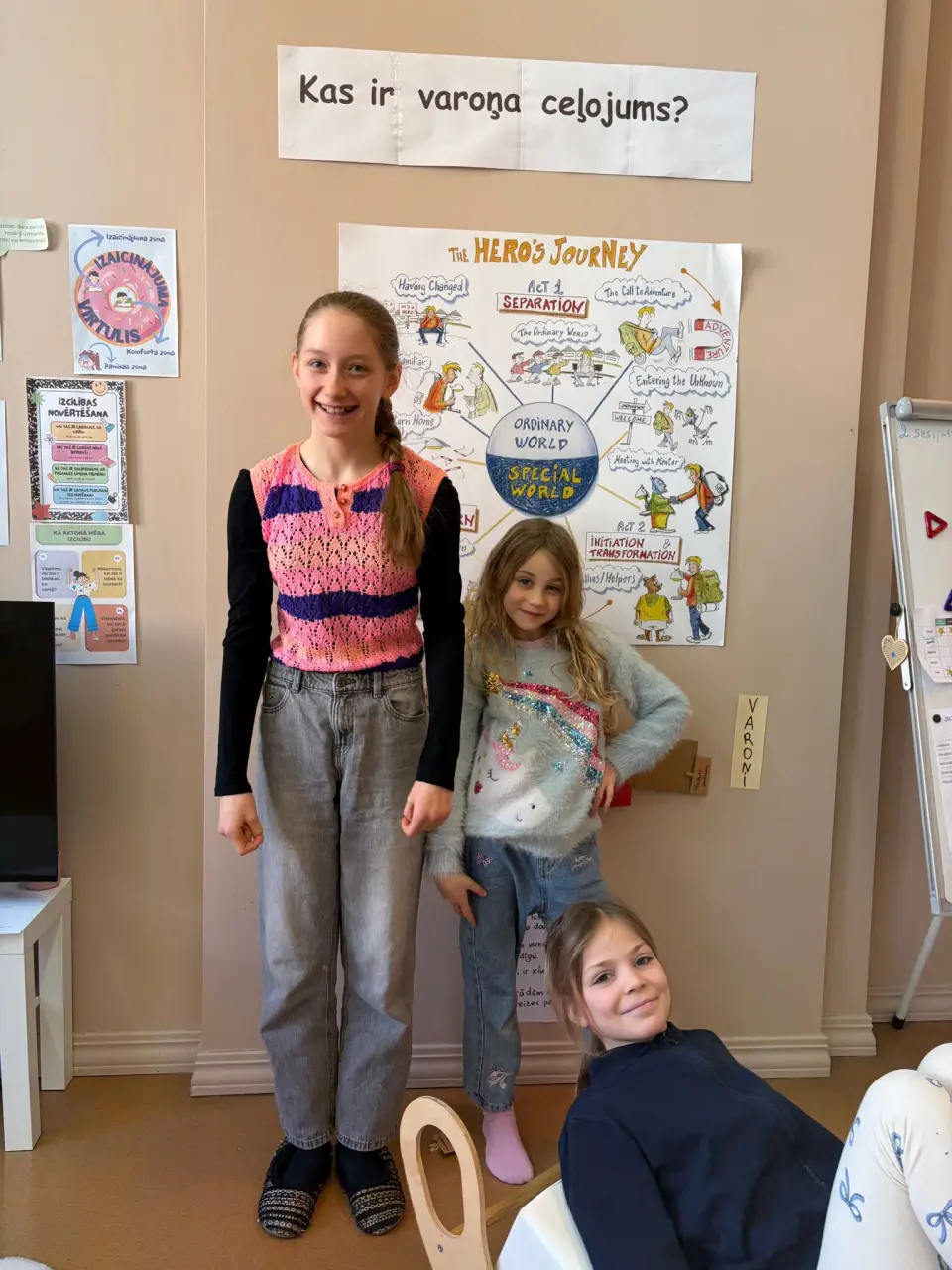
The studio wall: the hero's journey — the year a child plans for themselves
Seven sessions

The quests in 2026/27

A quest is one session-long project with a real result — a business, a garden, a robot, a performance. A session runs from three to six weeks: the calendar follows the national holidays, but the year is longer - running to mid-June if parents want it.

QuestWhenLengthWhat it is about
Build a Tribe2 September – 1 October5 weeksIn the first weeks the children learn to take responsibility — each for themselves and all of them together. They write the studio contract and lay the foundations for how the studio will live all year.
Entrepreneurship12 October – 19 November5 weeksThe explorers build a business of their own with one rule: no help from parents. On 19 November they sell what they have made to real customers at Āgenskalns market.
Athens in Ancient Greece30 November – 17 December3 weeksFor three weeks the studio lives as ancient Athens: voting, Socratic debate, stepping into the shoes of historical figures and working out what democracy means. At the exhibition the children defend their city, and the parents are citizens with a vote.
Programming and robotics4 January – 11 February6 weeksThe children build and program a robot that has to solve a real task. If it does not work, they hunt for the fault, fix it and try again — at the exhibition the robot runs in front of you.
A community garden22 February – 1 April5 weeksFrom seed to harvest: the children plan the beds, work out areas and water, and find out why one seedling grows and another does not. The garden stays for the neighbours and for the next lot of children.
Forensic science12 April – 20 May6 weeksA staged crime takes place in the studio, and the explorers solve it the way detectives would: fingerprints, chromatography, footprints, logic. At the exhibition the parents try to crack the case themselves.
Growing curiosity7 June – 8 July5 weeksEach child picks a question that genuinely interests them, designs an experiment and tests a hypothesis — learning the thing that serves them for life: how to ask a good question and find the answer.
What each row means

Three kinds of week

A session with its quest

Core skills in the morning block — reading, writing, maths — and the quest after it. The whole session moves towards one result, and the children carry a great deal of responsibility and freedom in choosing how they get there.

A passion project week

A week in which a child works on their own project rather than the shared quest. It is the time between sessions. The child chooses the subject; the guide helps cut it down to what fits in a week.

Holidays

Three holidays a year, as in state schools: autumn half term, 19 to 23 October; the winter holiday, 21 to 31 December; the spring holiday, 8 to 12 March.

The frame of the year

How the year opens and closes

1 September — the hero's journey ceremony

The first day of the year. The children write and sign a provisional studio contract, and the year begins with a ceremonial commitment.

The end of every session — an exhibition

The children show what they did in the session themselves, and answer your questions. The exhibition is public: it is the place to see a child's work rather than hear about it.

9 July — the end of year celebration

The close of the year: the year's badges, the end of this stage of the hero's journey, and a celebration with the families.

A day during a session

What an ordinary day looks like

The school day runs from 8.15 to 15.00.

8.15Doors open: arrival, free time, physical activity
9.00Morning launch — a Socratic conversation or the studio meeting, and the goals for the day
9.15The core-skills block: each child at their own pace, on their own platform, in their own way
10.30Civilisation or communication
11.00Lunch and time outdoors — we are outside every day
12.30The quest block: group work, materials, prototypes
14.30A look back at the day, badges, tidying up
15.00The day ends
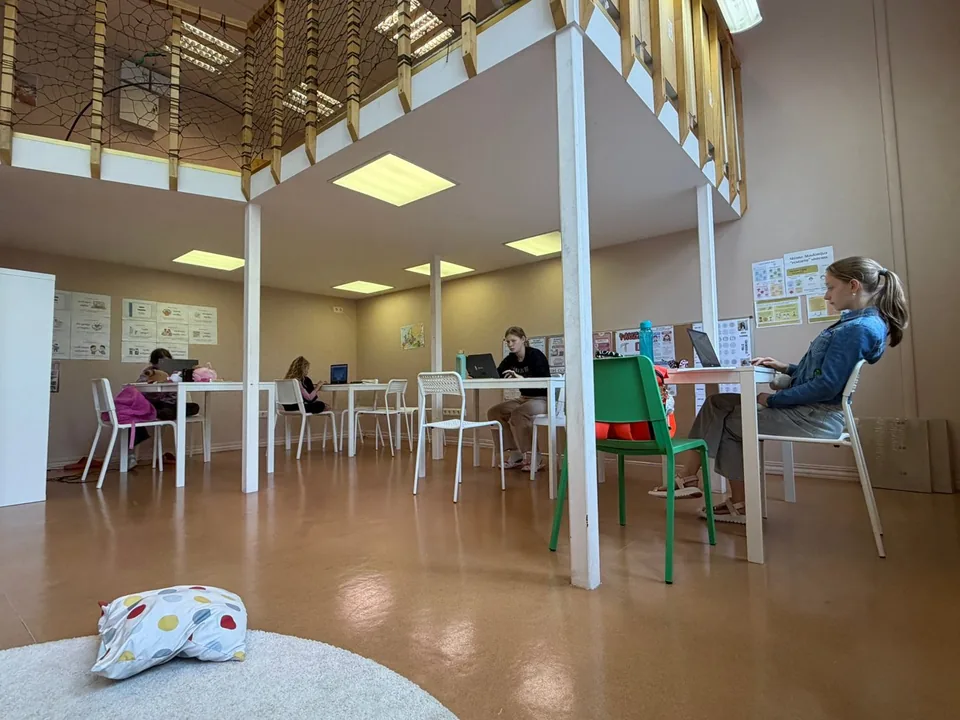
The studio during the learning day: each child at their own pace, in one room
Open days

Eight days when you can come

All at 17.30, Kronvalda bulvāris 1, Riga. Please let us know at info@actonriga.org, so that we can count on the people we need to help find the right door.

DateDayTime
24 NovemberTuesdayat 17.30
9 DecemberWednesdayat 17.30
7 JanuaryThursdayat 17.30
1 FebruaryMondayat 17.30
3 MarchWednesdayat 17.30
6 AprilTuesdayat 17.30
6 MayThursdayat 17.30
3 JuneThursdayat 17.30
Questions about the calendar

What parents usually ask

How long is one session?

From three to six weeks — see the table above.

Do we have to be at the exhibition?

You do not have to be, but you help your child by being there. At an exhibition a child explains their own work, to people they do not know, and sees that it interests someone outside the studio. There are seven exhibitions a year.

What happens in a passion project week?

A child picks their own subject and finishes it within the week: a model, a small book, a program, a series of experiments. The guide does not set the subject; the guide helps work out how big a project fits into five days, and at the end of the week asks what went well.

Do the holidays line up with the state school holidays?

Yes — autumn half term 19 to 23 October; the winter holiday 21 to 31 December; the spring holiday 8 to 12 March.

Does anything happen over the summer?

The school year runs to the beginning of July — the June session is a full learning session, not a summer camp. After the end of year celebration on 9 July the studio is closed for the summer.

When do we find out next year's dates?

We confirm the calendar for the next school year (2027/28) in the spring and send it to families with the contract renewal. If you are preparing an application now, ask for the exact dates in the admissions conversation.

The next step

Pick a day and come

A calendar is more convincing from the middle of the studio than from a screen. Come to one of the open days in the table above — all of them at 17.30.

An Acton Academy network school · Our programme is state-licensed, so a child can move to another school at any point and carry on.

SIA „Dare to be great“ · reg. No. 40203498129 · © 2026 Acton Academy Riga ·
WhatsApp — message us