
The big comparison
Waldorf school vs Montessori vs Acton Academy
If you are comparing alternatives to traditional school, three names available in Latvia come up most often: Montessori, Waldorf school (Steiner) and Acton Academy. All three care about a child who learns on their own, at their own pace, without fear of grades — but each gets there differently. Montessori comes from Maria Montessori's scientific observations of children, Waldorf school from Rudolf Steiner's view of child development, and Acton Academy combines proven ideas with 21st-century tools and real projects. Here is a comparison to help you understand which approach suits your family.
This is the big table, all three side by side. If only one of them interests you there are separate comparisons too: Montessori or Acton Academy and Waldorf school or Acton Academy.
| Criterion | Montessori | Waldorf school | Acton Academy |
|---|---|---|---|
| Class structure | Mixed-age classes split across three years | Single-age class, with one teacher staying with the class for years | Mixed-age classes grouped by readiness |
| Role of the adult | Observes, prepares the environment, steps back | Teacher leads from the front | Socratic guide who asks questions and prepares the environment |
| Pace | Self-paced | At the class's shared rhythm | Self-paced, with goals |
| Academic learning | Early, self-paced, individually with materials | Later, through images and stories | Self-paced, both individually and linked to projects |
| Assessment | Observation, no grades | Descriptive, no grades | No grades; instead badges, portfolios, public exhibitions |
| Technology | Minimal; physical materials | Deliberately minimal (early years) | Modern tools for core skills |
| Worldview | Not religious | Anthroposophy (Steiner) | None; open to everyone |
| What's distinctive | The prepared environment and materials | Art, rhythm, imagination | Quests, the Socratic method, entrepreneurship, the hero's journey |
What the research says about all three
All three approaches have been researched, though not equally. Montessori is the best documented — in her book “Montessori: The Science Behind the Genius”, Angeline Stoll Lillard gathered evidence that many Montessori ideas align with what modern psychology knows about learning. Waldorf school research (summarised, for example, in Bo Dahlin's book and in Ruhi Tyson's 2024 review of around 270 studies) shows that Waldorf pupils tend to be more motivated and socially engaged, while results in science and mathematics are in some places lower or mixed. Acton Academy draws on methods from both traditions and adds the Socratic approach and 21st-century findings.
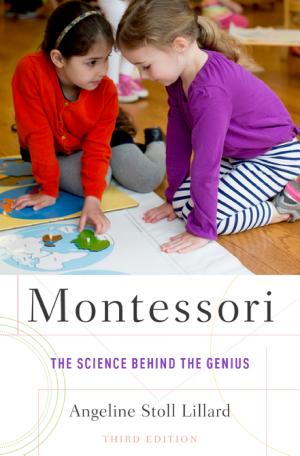
Montessori: The Science Behind the Genius
Angeline Stoll Lillard
Rudolf Steiner: The Relevance of Waldorf Education
Bo Dahlin
Class structure and age
All three recognise that children learn especially well from one another. Montessori groups children in three-year bands; Waldorf school keeps one class together with one teacher for many years; at Acton Academy Riga the studios are mixed-age, grouped by readiness, where older learners reinforce their own knowledge by teaching younger ones.
| Montessori | Waldorf school | Acton Academy |
|---|---|---|
| Mixed-age classes split across three years | Single-age class, with one teacher staying with the class for years | Mixed-age classes grouped by readiness |
The role of the adult
This is where the difference is greatest. The Montessori adult observes and prepares the environment, then steps back. The Waldorf teacher actively leads the class and teaches from the front. The Acton Academy Riga guide does not lead or give answers — instead they ask questions so the child thinks, analyses and defends their own view, developing critical thinking and self-direction.
| Montessori | Waldorf school | Acton Academy |
|---|---|---|
| Observes, demonstrates, steps back | Teacher leads from the front | Socratic guide who asks questions |
Pace and when academic learning begins
None of the three rushes a child through a single fixed timetable the way a traditional school does. Montessori lets children move at their own pace from early on; Waldorf school deliberately delays formal academic learning to later years (research shows that later readers catch up with early starters within a few years); at Acton Academy Riga each child masters core skills at their own pace — some earlier, some later — and links them to real projects.
| Montessori | Waldorf school | Acton Academy |
|---|---|---|
| Self-paced, early, with materials | Later, through images and stories | Self-paced, including linked to quests |
Assessment without grades
None of the three gives grades or standardised tests in the early years, and motivation psychology supports this: external evaluation undermines intrinsic motivation. What differs is how progress is shown.
| Montessori | Waldorf school | Acton Academy |
|---|---|---|
| Observation and mastery | Descriptive feedback | Badges that confirm mastery, portfolios and public exhibitions |
Art, imagination and creativity
Art matters to all three, but with different weight. For Waldorf it sits at the heart of daily learning, and research shows richer imagination and creative thinking. In Montessori, art has its place within the prepared environment. At Acton Academy Riga creativity also lives in projects and quests — children create real work for a real audience.
| Montessori | Waldorf school | Acton Academy |
|---|---|---|
| Part of the prepared environment | At the heart of daily learning | In projects and quests, for a real audience |
Technology
This is where Acton Academy differs most. Montessori and Waldorf school deliberately limit screens in the early years, and there is good reason for that. At Acton Academy Riga hands-on activity stays primary, but we use modern tools where they build core skills and prepare the child for a digital world.
| Montessori | Waldorf school | Acton Academy |
|---|---|---|
| Minimal; physical materials | Deliberately minimal (early years) | Modern tools, where they help |
Worldview
Montessori and Acton Academy are not built on a religious or spiritual worldview. Waldorf pedagogy is rooted in Steiner's anthroposophy, which shapes its rhythm, festivals and methods — though research shows that only a small share of graduates go on to become anthroposophists themselves. Acton Academy is open to all families regardless of belief.
| Montessori | Waldorf school | Acton Academy |
|---|---|---|
| Not religious | Anthroposophy (Steiner) | None; open to everyone |
Community, character and rhythm
All three care about more than knowledge. Waldorf school builds a strong community and a clear yearly rhythm with festivals; the Montessori community forms around the prepared environment; at Acton Academy Riga the studio is a small community where character develops through everyday practice — mutual agreements, feedback, studio meetings and accountability.
| Montessori | Waldorf school | Acton Academy |
|---|---|---|
| Community around the prepared environment | Close-knit community, rhythm, festivals | The studio as community; character through everyday practice |
What makes each one unique
If each approach had to be described by the one thing it does better than the others:
| Montessori | Waldorf school | Acton Academy |
|---|---|---|
| The prepared environment and self-correcting materials | Art, rhythm and imagination | Quests, the Socratic method, entrepreneurship and the hero's journey |
What Acton Academy adds
- The hero's journey. A personal mission story that drives each child's growth — every child is a hero in search of their calling.
- Daily Socratic discussions. Children think out loud, defend their views and learn from one another.
- Quests with a real outcome. Multi-week projects, such as a business market, teach children to solve open-ended problems and take initiative.
- Public exhibitions for a real audience. Mastery is shown by performing, not just by an adult watching.
- Modern tools for core skills. Used where technology adds value, while keeping hands-on activity primary.
Which approach suits your child?
How can you tell what might suit your family?
- If you are looking for a classic, calm environment with carefully designed materials and individual work — Montessori could be your choice.
- If you want an artistic, rhythmic, unhurried childhood with a strong community — you might be drawn to Waldorf school.
- If you want your child to develop self-direction, with modern tools, real projects, and to be ready for an unpredictable future — take a look at Acton Academy Riga.
Three paths, one heart
Montessori, Waldorf school and Acton Academy all believe a child learns best when trusted with responsibility for their own learning. They differ in method, not in goal.
Acton Academy takes what decades have proven in both traditions — self-direction, an unhurried pace, community and art — and adds real projects, entrepreneurship and modern tools, to prepare the child for the world as it will be, not as it was. Acton Academy Riga's mission is to inspire every child to find their calling and change the world.
Is this the right school for your family?
Fifteen minutes, no commitment — you ask, we answer. In English, whenever it suits you.