
Comparison
Waldorf school or Acton Academy?
Many families looking for an alternative to traditional school compare Waldorf (Steiner) education with Acton Academy.
Rudolf Steiner, who founded the first Waldorf school more than a hundred years ago, studied child development closely and built an education that cares for the whole child — mind, heart and hands, not only academic results. Many of his insights — an unhurried childhood, art, community, inner motivation — echo what research confirms today, and what Acton Academies value highly too. There are also places where we choose a different path.
Here is where we overlap, where we differ, and why.
This page is for a parent looking at Waldorf. If you are weighing Waldorf against Montessori, start with the Waldorf, Montessori and Acton comparison in one table.
“Our highest endeavour must be to develop free human beings who are able of themselves to impart purpose and direction to their lives.”
— Rudolf Steiner
What research confirms and what we keep
When researchers gathered international studies on Waldorf education — for example, Bo Dahlin in the book “Rudolf Steiner: The Relevance of Waldorf Education” and Ruhi Tyson’s 2024 review of around 270 studies — a fairly clear picture emerged. Waldorf pupils tend to be more motivated to learn and more socially engaged than pupils at traditional schools, while results in factual knowledge and science are in places lower or mixed. We keep what the research genuinely supports, and we state plainly where we go a different way.
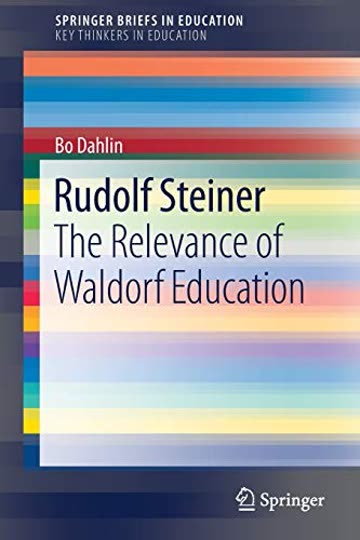
Rudolf Steiner: The Relevance of Waldorf Education
Bo Dahlin
The whole child — mind, heart and hands
Waldorf education’s aim has never been academic knowledge alone. It educates “head, heart and hands” — thinking, feeling and practical activity together. Researchers call this whole-child education, and it is linked to better emotional wellbeing in children. At Acton Academy Riga we see it the same way.
| Waldorf school | Acton Academy |
|---|---|
| Educates the whole child — mind, heart and hands; character and wellbeing matter as much as knowledge. | Also educates the whole child; character is developed through daily practice — peer agreements, feedback and accountability in the studio. |
No early grades or tests
Waldorf schools have no grades or standardised tests in the early years — instead, children receive descriptive feedback on how they are actually doing. Motivation psychology supports this: external rewards such as grades measurably undermine intrinsic motivation and depth of learning.
| Waldorf school | Acton Academy |
|---|---|
| No grades in the early years; descriptive, observation-based assessment. | No grades; mastery is shown through public exhibitions and badges — like an earned certificate or personal achievement, rather than an external judgement. |
Art and imagination every day
Waldorf education is known for giving art a daily place — drawing, music, movement, storytelling. Comparative studies of drawing and creative thinking show that this approach does build richer imagination and creativity. At Acton Academy Riga, art and creative expression are also part of learning.
| Waldorf school | Acton Academy |
|---|---|
| Art, music and imagination are at the heart of learning every day. | Art and creativity also live in projects and quests, where children create real work for a real audience, not just for practice. |
An unhurried childhood
Waldorf education deliberately holds off formal academic learning in the early years, leaving room for play, language and development. For a long time this looked risky, but research supports it: for example, in Suggate’s study, children who learned to read later caught up with early starters within a few years. An unhurried childhood is not falling behind.
| Waldorf school | Acton Academy |
|---|---|
| Formal academic learning starts later; the early years are devoted to play and development. | Each child masters core skills at their own pace, not on a fixed timetable. This can happen earlier or later. |
Developmental stages, not just age
Waldorf education teaches according to a child’s developmental stage, not just their calendar age, and mixed-age interaction is natural. The idea that a child learns best when ready is one of the most enduring findings in developmental psychology.
| Waldorf school | Acton Academy |
|---|---|
| Teaches by developmental stage; the child moves on when ready. | Mixed-age studios, grouped by readiness — younger children learn from older ones, and older children reinforce their own knowledge by passing it on. |
Community and rhythm
Waldorf schools have a strong sense of community and a clear daily and yearly rhythm — a morning circle, shared celebrations, predictable routines that give children a sense of security. Social engagement is one of the most consistently confirmed strengths of Waldorf education in the research.
| Waldorf school | Acton Academy |
|---|---|
| A close community; a clear daily and yearly rhythm and celebrations. | The studio is a small community with its own rhythm — a morning launch, an afternoon close, safety rails, and studio meetings where everyone has a voice. |
Joy in learning and inner motivation
International studies of Waldorf graduates (summarised in Dahlin’s work) show the same thing again and again: Waldorf pupils tend to be more interested in learning and more socially engaged. Inner motivation — learning because you want to, not because you’re told to — is exactly what Acton Academy keeps too.
| Waldorf school | Acton Academy |
|---|---|
| Emphasises inner motivation and genuine interest in learning. | The child sets their own goals and drives their own learning, building inner motivation. Freedom and responsibility are earned gradually. |
“Receive the children in reverence, educate them in love, let them go forth in freedom.”
— Rudolf Steiner
Where and why Acton Academy differs from Waldorf education
Class teacher → Socratic guide
| Waldorf school (classic) | Acton Academy |
|---|---|
| One class teacher often stays with the same class for many years (grades 1–8) and leads instruction from the front, passing on knowledge and imagery. | The guide does not lead from the front and does not give answers — they ask hard questions and let children drive their own learning (learner-driven learning). |
Why: we want to raise confident, critical thinkers who can find their own answers and defend them. A long-term bond with one teacher builds closeness, but we choose to put the authority in the question, not in the teacher.
An anthroposophical worldview → no worldview
| Waldorf school (classic) | Acton Academy |
|---|---|
| The pedagogy is built on Steiner’s anthroposophy — a spiritual view of the human being and development that shapes the rhythm of lessons, celebrations and methods. | The school is not built on any religious or spiritual worldview. We are open to all families regardless of belief. |
Why: research shows that only a small share of Waldorf graduates go on to become anthroposophists themselves, yet the worldview runs through the method. We choose not to choose a worldview on the child’s behalf — that is for the family to decide.
Avoiding technology → modern tools where they help
| Waldorf school (classic) | Acton Academy |
|---|---|
| Deliberately avoids screens and technology, especially in the early years. | Hands-on, collaborative activity stays primary, but we use modern tools where they genuinely build core skills and prepare children for the real world. |
Why: limiting screens in the early years is sensible, and we agree with it. But the world children will grow up into is digital — our goal is for them to master technology and use it where it genuinely helps.
Imagery-based, set sequence → self-paced core skills and real projects
| Waldorf school (classic) | Acton Academy |
|---|---|
| Academic skills often come through imagery, stories and art, following a shared, pre-set sequence for the whole class. | Each child masters core skills at their own pace using adaptive tools, and connects them to real quests — projects with a genuine outcome. |
Why: imagery and stories are wonderful, and we use them. But for core skills we believe in mastery at one’s own pace and real work, not a shared timetable. Some children race ahead, others need more time to reach mastery, and that is natural.
What Acton Academy Riga adds
- The hero’s journey as a learning framework. Waldorf education gives an unhurried, artistic childhood; we add to that a personal mission story — every child is a hero in search of their calling.
- Socratic discussions every day. Alongside stories and art, learners think out loud, defend a position and learn from one another every day.
- Quests with a real outcome. Multi-week projects, such as running a business market, teach children to solve open-ended problems and take initiative — skills that are hard to teach through imagery alone.
- Public exhibitions for a real audience. Mastery is shown by performing, not just by being observed by a teacher — this builds confidence and accountability.
- Modern tools for core skills. Where technology adds real value, we use it, while keeping hands-on activity as the primary mode.
Why we are not trying to be a Waldorf school
Rudolf Steiner was a deep thinker, and much of his approach has held up for a hundred years — an unhurried childhood, art, community, inner motivation.
The Waldorf method is closely tied to the anthroposophical worldview and to a set, image- and stage-based sequence of learning.
We see some things differently: our school is not built on a worldview. We hold the belief that every child is a genius who deserves to find their calling and change the world. The child masters core skills at their own pace with modern tools, and learning is driven by Socratic questions, not a teacher leading from the front.
So we are not, and are not trying to be, a Waldorf school. We have taken what the research genuinely supports — inner motivation, community, art — and built it into our own, different system, with the hero’s journey, quests and Socratic guides.
Summary
Where we overlap
| Principle | Waldorf school | Acton Academy |
|---|---|---|
| Whole-child education | Mind, heart, hands | Same + character through daily practice |
| Grades | None (early years); descriptive | None; badges and exhibitions |
| Art and imagination | Every day, at the heart of learning | In projects and quests, and separately, for a real audience |
| Unhurried childhood | Later formal academic learning | Self-paced core skills, no fixed timetable |
| Community and rhythm | A close community, celebrations | A studio with a launch, a close, rituals and celebrations |
| Motivation | Inner interest in learning | The child sets their own goals |
Where we differ
| Dimension | Waldorf school | Acton Academy |
|---|---|---|
| The adult’s role | A class teacher leads for years | A Socratic guide who asks |
| Worldview | Anthroposophy | None; open to all |
| Technology | Deliberately avoided (early years) | Modern tools where they help |
| Academic learning | Through imagery, in a shared sequence | Self-paced, in real quests |
| Class structure | Single-age class, shared pace | Mixed-age studio, individual pace |
Waldorf education is rich and time-tested, and some of its strengths — motivation, art and community — are our values too. But we are a school with slightly different goals, built for the 21st century.
Acton Academy Riga and Waldorf education share a common heart
Acton Academy Riga’s mission is to inspire every child to find their calling and change the world. Waldorf education, too, seeks to raise free, healthy human beings who give their own lives direction. So in several ways, we walk hand in hand.
- In both schools, the child learns because they want to, not because they are told to — inner motivation, not grades.
- Both care about the whole child — character, wellbeing and community, not only knowledge.
- Waldorf education showed how important an unhurried childhood, full of art and community, is. Acton Academy builds on that same foundation and adds more: real projects and enterprise, self-set goals, Socratic prompts and modern tools.
Waldorf education tells the story of a child’s growth through developmental stages and an artistic rhythm. Acton Academy tells that same story of growth through each child’s personal hero’s journey, set in a 21st-century context.
Is this the right school for your family?
Fifteen minutes, no commitment — you ask, we answer. In English, whenever it suits you.