The question parents rarely ask out loud
Who is responsible for safety in the studio?
Self-directed learning can sound like a room with no adult in it. It is not. Safety here is deliberately split in two.
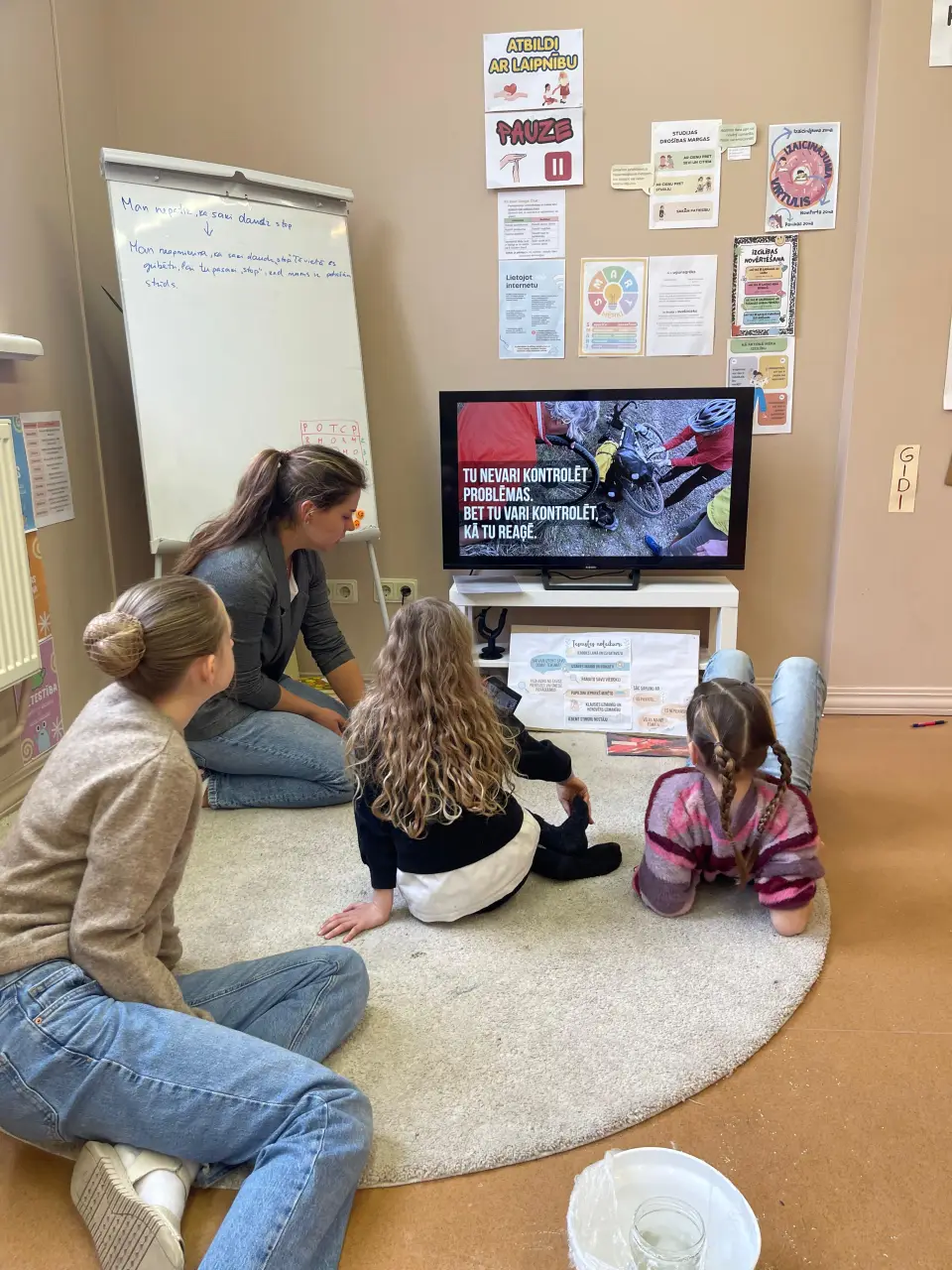
Self-directed learning can sound like a room with no adult in it. It is not. Safety here is deliberately split in two.
Handing a child both would be negligent. Keeping both would take away the responsibility they grow by carrying.
Safety in the studio is the guide's responsibility. Basic safety is one of the few things we do not delegate to the children. The Family Handbook says it plainly: the school takes an active part in setting the safety rails, because what we owe you is a studio that stays a safe place to learn in.
Every year the children write and sign the studio contract themselves — the studio's governing document — and that is why they are the ones who defend it. Conflicts go to the peace table, where the mediator may be another child, a member of the council, or the guide. The standards of the community are set by the council the children elect and by the weekly studio meeting.
As an explorer — our word for a learner — I promise: to be kind and to treat people with respect; to stay with my own work and not get in the way of anyone else's; to look after the studio. They are talked through again whenever something concrete happens, so that the line between crossing a boundary and simply being careless is clear. The children know these by heart.
The children write it themselves in the first session of the year, and sign it. Because they wrote it, they are the ones who hold each other to it — which is the reason it works. The guide stays out of enforcing it, though she may ask, out of curiosity, whether a clause wants changing or whether it is time to start keeping it again. The studio meeting can vote to change these rules too, and to try new ones out during the year as the need comes up.
A disagreement goes there first, and the children work through it with a protocol they have practised: I-statements, say back what you heard, look for options, agree. The guide steps in when their own process does not get there.
If a child crosses a safety rail — deliberately hurting someone else, for instance — a restart follows. These are the natural consequences of unkind behaviour: time away from the group, then a fresh commitment and a warm return. Shaming is never part of the process.
No. The guide is in the studio for the whole school day. A guide who does not answer questions and does not stand at the board has not left the room — her job is simply a different one.
A restart follows: time away from the group to get on top of the feelings, to commit again to the studio contract, and then to be warmly taken back in. On a serious question of ethics we call everyone together — everyone involved in one room, so that there are no conflicting accounts.
Everyone breaks a promise sometimes. If it keeps happening, the conversation stops being a studio matter: we sit down with the family and agree what changes.
The aim is not for an adult to settle it on the children's behalf — the aim is for the children to learn to settle it themselves, with a good heart and a clear head. Which is why the process starts at the peace table. But deliberately hurting someone is crossing a safety rail, and there the guide steps in at once.
Children do not carry medicine in the studio: it is handed to the guide in its original packaging, with the child's name and written instructions for the dose and the timing. Tell us about allergies and long-term conditions in the admissions conversation, so the guide knows what to do before anything happens.
Every child in the studio has a Chromebook of their own with a content filter. The boundaries around technology are explicit, the devices are never for entertainment, and crossing those boundaries suspends the right to use them for a week. The studio is treated as a place apart, and these are boundaries we hold firmly.
There are about ten children in the studio. The guide is there for the whole school day, but she does not decide what each child works on: she is a Socratic mentor, and her instrument is the question. She may point out what the current block of the day allows, since each part of it opens different choices. As the children take on self-management and leadership, the guide becomes steadily less visible. Keeping to the choices the timetable allows, and to the studio contract, is something the children hold each other to.
You can see the studio at an open day. If this is the question that decides it for you — and for many families it is — ask it in the admissions conversation.
A school in the Acton Academy network · 300+ schools worldwide
If you agree, Meta Platforms Ireland (Facebook, Instagram) receives information about which pages you open, what you click on and whether you submit a form, together with your IP address, browser data and Meta cookies. That is how we see which of our ads are useful to parents. Without your consent we send nothing to Meta. You can change your choice at any time at the bottom of the page (“Cookie settings”).