The method

What a Socratic school is

The Socratic method is simple and hard to carry out: the adult asks a question and does not answer it themselves. The children look for the answer out loud, argue with each other, and change their minds when the argument is better than their own.

Years 1 to 6 · An Acton Academy network school · 300+ schools worldwide
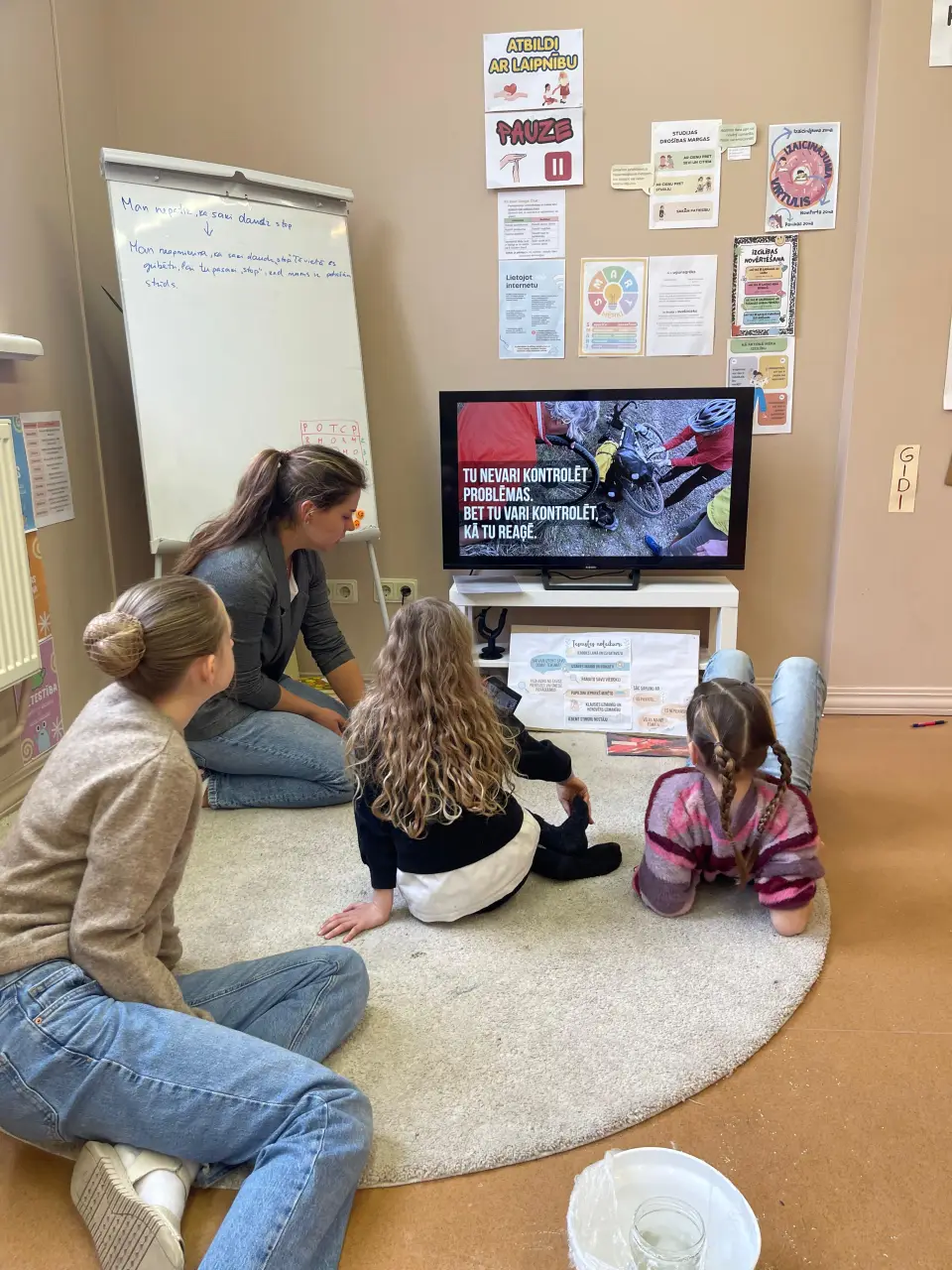
A Socratic launch on the rug: the guide sits alongside the children at the screen rather than standing in front of them
In short

A Socratic school in one paragraph

A Socratic school is a school where you learn by answering questions rather than by writing answers down. The name comes from Socrates — the ancient Greek thinker who lectured nobody in Athens but asked questions until the person he was talking to found the hole in their own thinking.

In a school that means three things: the adult (here, the guide) asks rather than explains; the children justify their thinking and argue with one another; and this is how the whole day goes, rather than one session a week. What comes out of it is not an answer learned but a child who can think out loud, defend their view and change it when they hear a better argument.

The definition

Three things that set it apart from an ordinary classroom conversation

Discussion in a classroom happens in plenty of places. What makes it Socratic is what happens to the adult's answer and to the child's thinking.

The question has no answer at the back of the book

The guide asks a question that has no single right answer. So nobody can guess what the adult wants to hear, and guessing as a strategy does not work.

The adult falls silent

After the question the guide says nothing. The hardest part of their job is not letting the conversation turn into a lecture.

You are allowed to change your mind

A child states their position, hears a better argument and changes their mind. That is not losing the conversation; that is what the conversation is for.

What it looks like

The morning launch, step by step

The day begins with a launch — a short Socratic conversation in a circle. Here is what happens in it, in order.

1

One question

The guide asks a question and explains nothing further. The question is tied to whatever the studio is working on at the time.

2

The children talk

Those who want to answer do, and then those who think otherwise argue back. The guide keeps the order, not the content.

3

Argument against argument

A child who claims something is asked to justify it. The justification comes from the children themselves rather than from the guide, which is why it can be challenged.

4

Nobody gets the right answer

What comes after the conversation is what people took from it. Some children leave with one conclusion and some with another, and that is allowed.

Launches happen several times a day, not only in the morning.

Where else in the day

The same method outside the circle

The Socratic method here is not one item on a timetable. It is the way a guide works all day.

When a child is stuck

The guide does not supply the answer but asks: What have you already tried? Have you met a task like this before? Can you say it in your own words? Three questions, and usually the child answers it themselves.

In a quest team

A quest is a 6 week project with a real result. The argument about which version is better happens between the children, and the guide does not pick the winner.

At the studio meeting

On Friday the studio looks back at the week and gives one another feedback. The adult is not the judge here — the standards of the community are set by the children.

At a public exhibition

At an exhibition the assessor is the people in the room, not the guide: a child takes questions from people they have no reason to go easy on. There are seven such exhibitions a year, one every 6 weeks or so.

Further questions

What parents ask about it

Does this mean nobody helps the child?

No. The help is a question rather than an answer. The guide is in the studio all day and steps in at once where safety or boundaries are concerned; on a piece of work they help a child get forward themselves rather than doing it for them.

Is it not too hard for a quiet child?

It can be at first. Nobody is made to speak in the circle, and some children spend the first weeks listening. There is more talking here than elsewhere, but quieter children open up too, once they see that the conversation is an exchange of thinking rather than a recital of the "right" view, and that mistakes are part of learning and let us grow rather than being a judgement.

Are there other Socratic schools in Latvia?

Individual Socratic conversations happen elsewhere too, and several schools put the emphasis on discussion. The difference is somewhere else: here the Socratic conversation is the foundation of the learning day, not a separate method or one session a week.

How does this differ from a debating club?

In a debate the position is assigned and the aim is to win. In a Socratic conversation the position is the child's own and the aim is to get nearer to what is true — which is why changing your mind halfway through is a good thing rather than a bad one.

How will I see that it is doing something?

By the way a child justifies their thinking at home: whether they say why they think it, and whether they hold up to the question "why". Progress in skills is shown by badges and the portfolio; this you can judge at the dinner table as well.

The next step

A Socratic conversation is hard to describe and easy to recognise

Come to an open day at 17.30.

3 places left for this year (the 2026/27 school year). · Kronvalda bulvāris 1, Riga

SIA „Dare to be great“ · reg. No. 40203498129 · © 2026 Acton Academy Riga ·
WhatsApp — message us